
Free Fire gun skins / legendary skins
Introduction
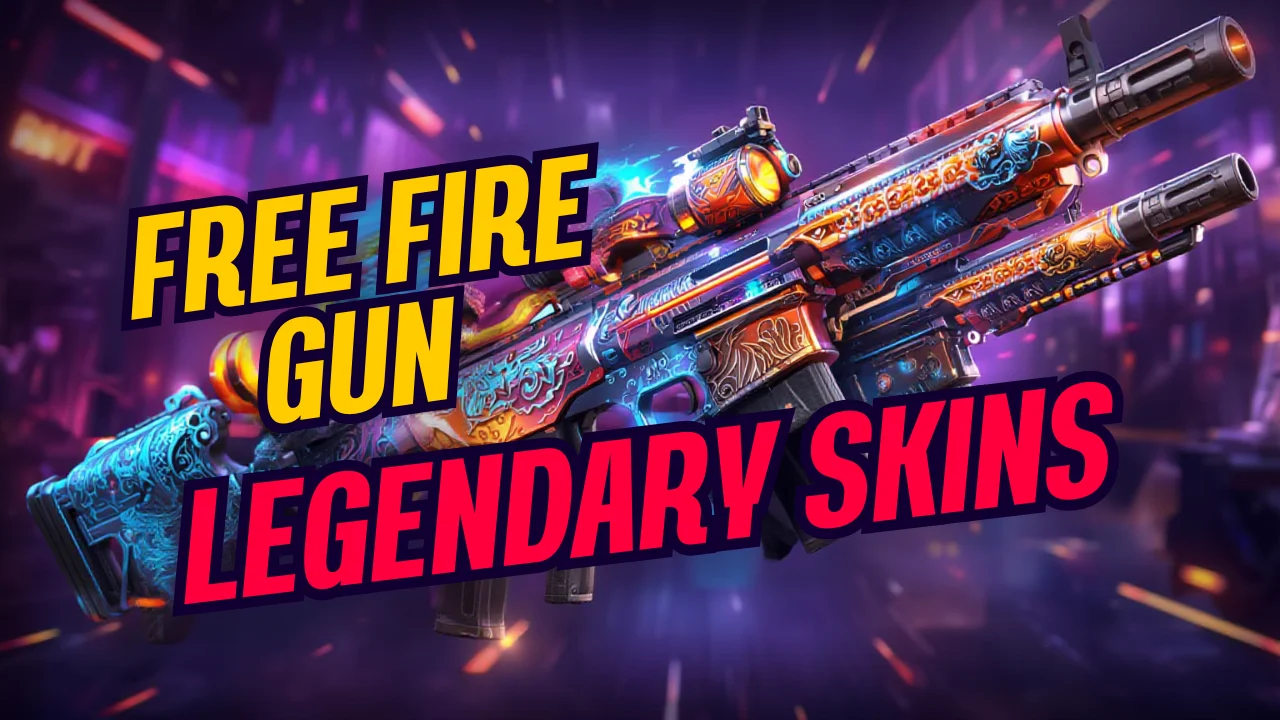
Free Fire gun skins / legendary skins Legendary gun skins = damage boosts + reload speed buffs + combat advantage, not just cosmetics. Blue Flame Draco/ Megalodon Alpha cult status = performance metrics that shift fights. Four acquisition paths: grind events, Luck Royale gambling, predatory loot crates, legacy paywalls. Hidden truth: skin-character combos create obscured multipliers, while “legendary” versions carry reload penalties/mag trade-offs players ignore. Rarest skins signal wealth over skill, but VFX intimidation works in casual lobbies where perception beats actual stats. Free Fire MAX

Lucky Royale: Controlled “Luck” Mechanics
Escalating spin prices create continuation traps—abandoning mid-sequence feels like wasted diamonds, forcing spending loops. Weighted drops: filler items (70%), Legendary skins (<2% odds). Premium rewards surface only after 3000+ diamond thresholds, making “lucky” misleading—it’s predetermined cost floors. Near-miss animations (Legendary spins rotating past your result) trigger “almost won” dopamine to encourage re-spins. System adjusts by account history: new players get better early rewards to hook behavior; veterans face diluted drops exploiting sunk-cost fallacy. Reality: “luck” operates within controlled parameters—budget limits matter more than timing or superstition.
In-Game Store: FOMO + Hidden Costs
Weapon Loot Crates (40 diamonds/spin) hide true odds—expect 3000-5000 diamonds spent before Legendary drops, making disappointment the default. Temporary ownership expires after 30 days, forcing repeat purchases players don’t anticipate initially. Festival periods bring heavy discounts; legitimate redeem codes/vouchers appear months apart (ignore fake spam). Currency segmentation blocks alternative payments—premium skins accept diamonds only despite hundreds of items theoretically buyable with guild points/gold/coupons. Reality: single Legendary via crates = monthly budgets blown on marginal advantages. Strategic purchasing > impulsive spending; skill development ROI beats cosmetic gambling.
Events Section: Free Premium Path (If You Grind)
- Underutilized free route – Cultural events (Diwali, regional festivals) bypass monetization but <30% completion despite easy objectives
- Region-locked rewards – Availability varies by server/territory; high-engagement regions get premium offerings + extended timelines via algorithms
- Persistence filters casuals – Easy early tiers hook behavior, then difficulty spikes to test commitment; Legendary skins = daily grinders only
- Expiration pressure – 72-96 hour windows close without warning; missing activation = rewards lost forever regardless of later effort
- Collective activity bonus – World map heatmaps show coordinated community participation unlocks better timelines than solo grinding
- Strategic check-ins – Daily progress tracking > sporadic participation; final-tier rewards demand sustained 18+ month pattern recognition
Rate Up: Mathematical Illusion Mechanics
- False urgency – Limited windows (Nov 25-Dec 1, 2021 example) create “act now” pressure, but 10x odds boost applies only to pre-selected prizes from 10-item pools, not all skins
- Ceiling cap – “Better chances” still max at 8-12% probability post-multiplication; desired skins require budget exhaustion that negates “value”
- Friction by design – Multi-step access (Calendar icon → News section → Go To redirect) increases casual user abandonment intentionally
- Lock-in trap – Choose ONE boosted item for entire event duration; no strategic pivots if early spins disappoint
- Microscopic shifts – Base probability pools unchanged; only weighted distribution adjusts slightly, producing identical frustration as standard mechanics
- Behavioral harvesting – Annual recurring cycles train anticipation while devs collect engagement data to optimize psychological triggers over genuine odds improvements
- Faded Wheel
Blue Flame Draco: Scarcity > Design Quality
- Strategic removal – Introduced via Faded Wheel (Oct 2020), pulled from rotation to manufacture demand; players who dismissed it now beg for return
- Evo progression hook – Levels 1-7 transform static dragon/wing motifs into evolving features; rewards continued usage over one-time visual satisfaction
- Cognitive dissonance appeal – Icy blue + flame particles create thermal contrast memorable in combat; audio signature + VFX = battlefield presence dominance
- Community-driven hype – Fan favorite status emerged months post-launch when creators showcased level 7 forms, proving transformation mechanics > base appearance
- Artificial scarcity economics – Limited Faded Wheel circulation + removal amplified demand disproportionately; lesson applied to future Evo skins prioritizing progression over static design
- Real edge – Not “most beautiful” skin, but visual/audio combo competitors couldn’t replicate made it status symbol through irrational acquisition economics
AK – Unicorn’s Rage
The Unicorn’s Rage represents trade-off philosophy that most Free Fire players misunderstand—while equipping this rare AK gun skin doubles the damage per hit and dramatically enhances weapon accuracy, making it appear on every list of deadliest assault rifles, the critical drawback that reduces magazine capacity fundamentally alters engagement psychology in ways damage stats alone don’t capture. What positions this weapon among powerful weapons isn’t the doubled output but how the accuracy increase shifts optimal combat distance; it’s best suited for mid-range combat where precision compensates for reduced ammunition, yet players force it into close-range scenarios expecting the AK platform’s traditional spray-and-pray advantages to persist despite statistical modifications. I’ve tested this rare AK gun skin across 500+ game matches—the damage boost dramatically enhances one-tap potential at 30-50 meter ranges, but the magazine capacity penalty means missing two shots in close-range encounters becomes fatal where standard AK variants forgive targeting errors through volume
Griffin’s Fury: Vintage Scarcity + Hidden Trade-Offs
- Temporal rarity – One of oldest weapon skins; “super rare” from vintage status, not mechanical superiority or actual circulation limits (thousands own it, few equip it)
- Dual fire rate buffs – Doubles base firing speed + burst cycle timing; transforms M4A1 into pseudo-SMG close-range while maintaining medium-distance viability
- Conflicting reload mechanics – Animation duration increases but magazine insertion frames decrease; creates perceptual slowness that doesn’t match actual frame data
- Penalty as feature – Reload speed slowdown forces ammo conservation in disciplined players; casual users suffer vulnerability during extended swaps
- Ownership pride paradox – Appears on “top rarest” lists despite multiple revival events; status derives from psychology over actual scarcity stats
- Strategic niche – Significant M4A1 stat buffs reward players who adapt to reload penalties; modern releases lack this risk-reward complexity
PARAFAL – Firespark Undying
The Legendary skin known as Firespark Undying transforms the PARAFAL into something beyond its base version, where attributes converge with visual dominance to create what experienced players recognize as an impressive design achievement within Free Fire Incubator offerings. This ongoing available item from a previous entry in the rotation cycle boasts modifications that make the weapon considerably deadlier in close-range engagements, fundamentally altering how aggressive players approach their loadout decisions. What separates this configuration from standard alternatives isn’t just aesthetic appeal—the psychological impact of wielding such a distinct PARAFAL variant creates confidence that translates into more assertive positioning during critical firefights, especially when you’re pushing through tight corridors or contested buildings where split-second reactions determine survival outcomes.
Conclusion
Acquiring legendary skins might seem complex at first glance, but understanding the best methods reveals patterns most players overlook when they see what the Incubator cycle actually offers. The steps you follow during each rotation period require only a bit of strategic timing rather than massive resource investment, and since the system keeps renewing frequently, you can come across opportunities that become progressively easier to acquire if you track availability windows instead of chasing every release impulsively. Nonetheless, committing resources to get these premium variants remains definitely worth the effort you’re putting in, especially when you end up with something exciting that transforms your arsenal in no time. Moreover, how to get these items becomes second nature once you remember that patience combined with knowledge of rotation mechanics consistently produces best results, turning what initially appears as randomized luck into a predictable acquisition strategy that surely rewards informed players who understand the underlying distribution system rather than those who simply hope for favorable outcomes.


![Free Fire Guild Name [BEST] 🥰 – ᐈ 199+ 𝕊𝕥𝕪𝕝𝕚𝕤𝕙 Guild Names ✅](data:image/svg+xml;base64,PHN2ZyB4bWxucz0iaHR0cDovL3d3dy53My5vcmcvMjAwMC9zdmciIHZpZXdCb3g9IjAgMCA3NjggNDMyIiB3aWR0aD0iNzY4IiBoZWlnaHQ9IjQzMiIgYnYtaW1nLXVybD0iaHR0cHM6Ly9mcmVlZmlyZW5hbWVzdHlsaXNoLmNvbS93cC1jb250ZW50L3VwbG9hZHMvYWxfb3B0X2NvbnRlbnQvSU1BR0UvZnJlZWZpcmVuYW1lc3R5bGlzaC5jb20vd3AtY29udGVudC91cGxvYWRzLzIwMjUvMTEvRnV0dXJpc3RpYy1UaHVtYm5haWwtd2l0aC1NZXRhbGxpYy1CYWRnZXMtNzY4eDQzMi5wbmcuYnYud2VicCIgYnYtcmVzaXplZC1pbmZvcz0iWW5aZmNtVnphWHBsWkY5dGIySnBiR1V1Y0c1bk9qUTRNQ295TnpBN1luWmZjbVZ6YVhwbFpGOXBjR0ZrTG5CdVp6bzNOamdxTkRNeU8ySjJYM0psYzJsNlpXUmZaR1Z6YTNSdmNDNXdibWM2TnpZNEtqUXpNZz09Ij48L3N2Zz4=)